24/7 VETERINARY CLINIC


Intervertebral disc herniation
What do we treat?
Intervertebral disc herniation
Intervertebral disc herniation, also known as disc disease, is a serious spinal condition that affects domestic animals. It is relatively rare in cats, but much more common in small dogs. It can affect any four-legged animal, but chondrodystrophic breeds are particularly at risk. These include dachshunds, Welsh corgis, basset hounds, beagles, miniature poodles, Pekingese, cocker spaniels, Shih Tzus, and French bulldogs.
This disease is degenerative in nature and involves damage or displacement of the intervertebral disc, commonly known as the disc. The function of the intervertebral discs is to provide mobility and protection to the spine, as well as cushioning for the vertebral bodies and spinal cord.
Intervertebral discs are made up of a gelatinous nucleus and a fibrous ring that protects it. If nothing alarming happens, both elements work together to ensure even distribution of forces and flexibility of the spine. When the fibrous ring ruptures, the unprotected nucleus pulposus can move, leading to a herniated disc, compression of the spinal cord or nerves, and a range of neurological symptoms. This type of herniation is called Hansen 1. Hansen 2 is diagnosed when the weakened annulus fibrosus bulges but does not rupture completely.
Intervertebral discs are made up of a gelatinous nucleus and a fibrous ring that protects it. If nothing alarming happens, both elements work together to ensure even distribution of forces and flexibility of the spine. When the fibrous ring ruptures, the unprotected nucleus pulposus can move, leading to a herniated disc, compression of the spinal cord or nerves, and a range of neurological symptoms. This type of herniation is called Hansen 1. Hansen 2 is diagnosed when the weakened annulus fibrosus bulges but does not rupture completely.
Intervertebral disc herniation – symptoms
The initial symptoms of intervertebral disc herniation may be subtle, and your pet may effectively mask them. Visible symptoms of the condition appear as it progresses and most often include:
- discomfort, pain when touching the back, neck or lumbar region (depending on the location of the hernia),
- “cat’s back,” i.e., an unnatural curvature of the back,
- stiff neck,
- muscle weakness, unsteady or uncertain gait, lameness,
- avoiding movement, running or jumping,
- difficulty moving limbs,
- paralysis (most often of the hind limbs),
- lack of coordination,
- urinary and/or fecal incontinence,
- lack of response to pain stimuli.
Symptoms of intervertebral disc herniation also manifest themselves in your pet’s behavior, which may become apathetic and listless or, on the contrary, restless, irritable, or aggressive. The pain associated with the condition may cause the dog to avoid interaction with people and other animals, lose interest in play, and suffer from a lack of appetite. Another clear warning sign is showing pain or whimpering when lifted.
Intervertebral disc herniation – symptoms and causes
Several factors can cause a herniated disc. First of all, it is a genetic predisposition in dog breeds that have an elongated torso and short legs. In their case, disc degeneration occurs more quickly, so hernias also affect young animals. Some dogs have congenital spinal defects, such as scoliosis, which can lead to disc damage.
Intervertebral disc herniation can be the result of mechanical trauma – a strong blow, a fall from a height, or sudden movements. Improper training and excessive physical exertion can also contribute to the development of this degeneration. In small dogs, frequent climbing stairs, jumping on and off the couch, being overweight or obese, and not getting enough daily exercise can also be dangerous.
Another factor is the age of the dog. Over time, intervertebral discs lose water content and, as a result, elasticity. This makes them more prone to rupture in older dogs.
Intervertebral disc herniation – treatment
Treatment of intervertebral disc herniation includes surgery or conservative treatment. The choice of method depends on the condition of the animal and the results of diagnostic tests. Imaging tests such as X-rays, CT scans, and MRI are used to diagnose the condition.
To relieve pain in the early stages of the disease, pets are given steroids, painkillers, or muscle relaxants. It is also important to limit physical activity, including walks and movement around the house or garden.
Surgery is required when the condition is advanced. Surgical treatment of intervertebral disc herniation involves removing part of the nucleus pulposus that is pressing on the spinal cord or nerves. It is performed by a veterinarian or animal neurologist. After the procedure, the specialist’s recommendations for proper care of the pet should be followed.
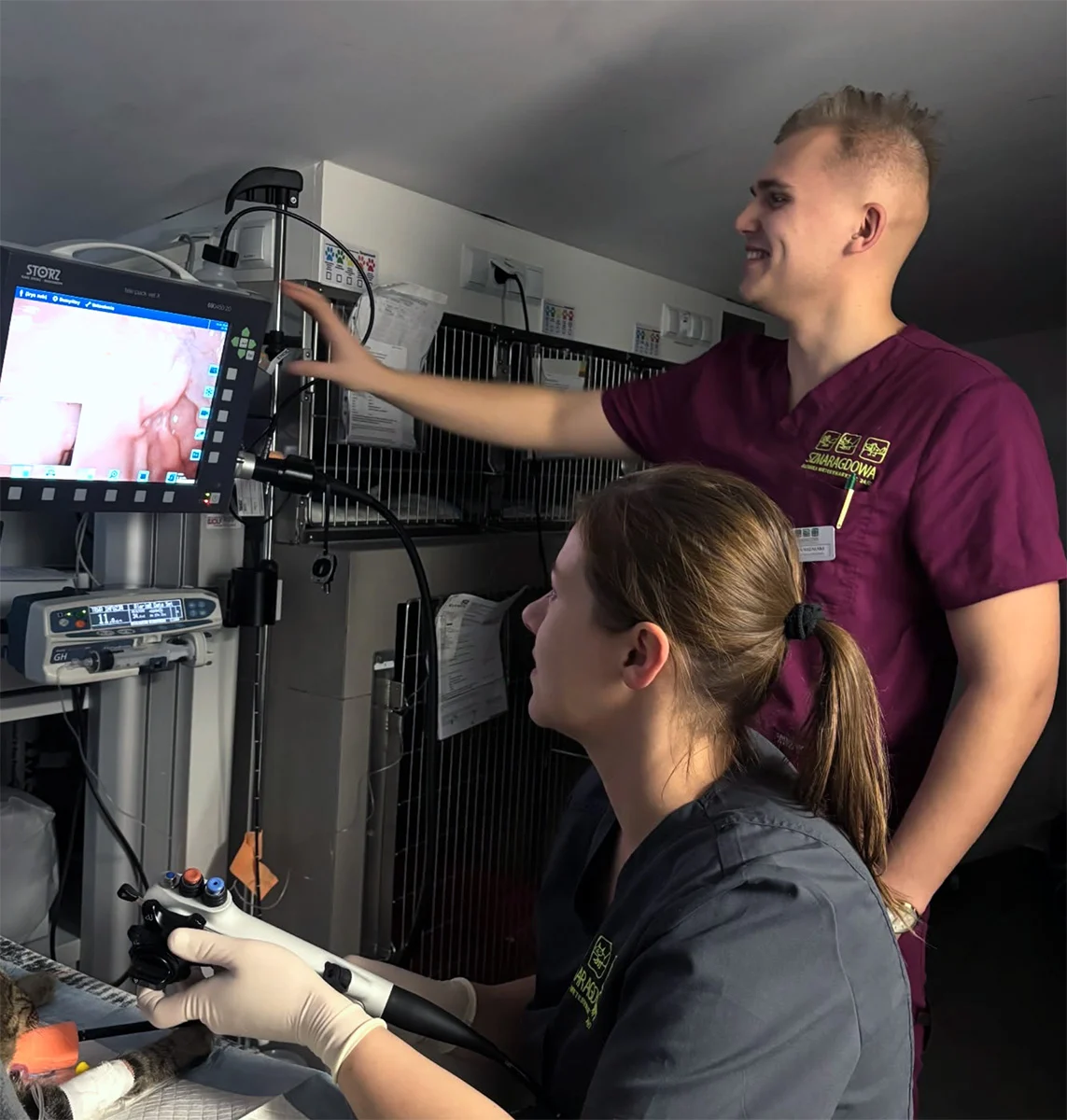
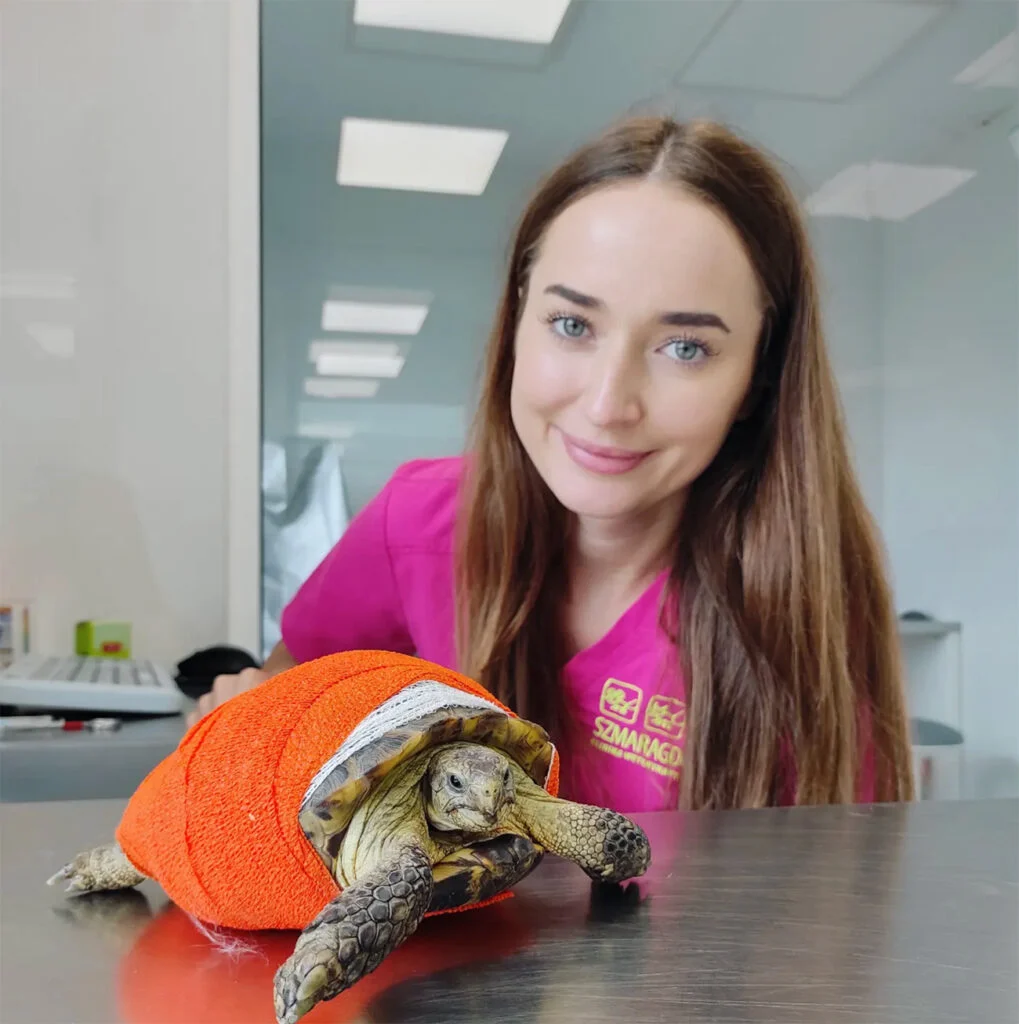
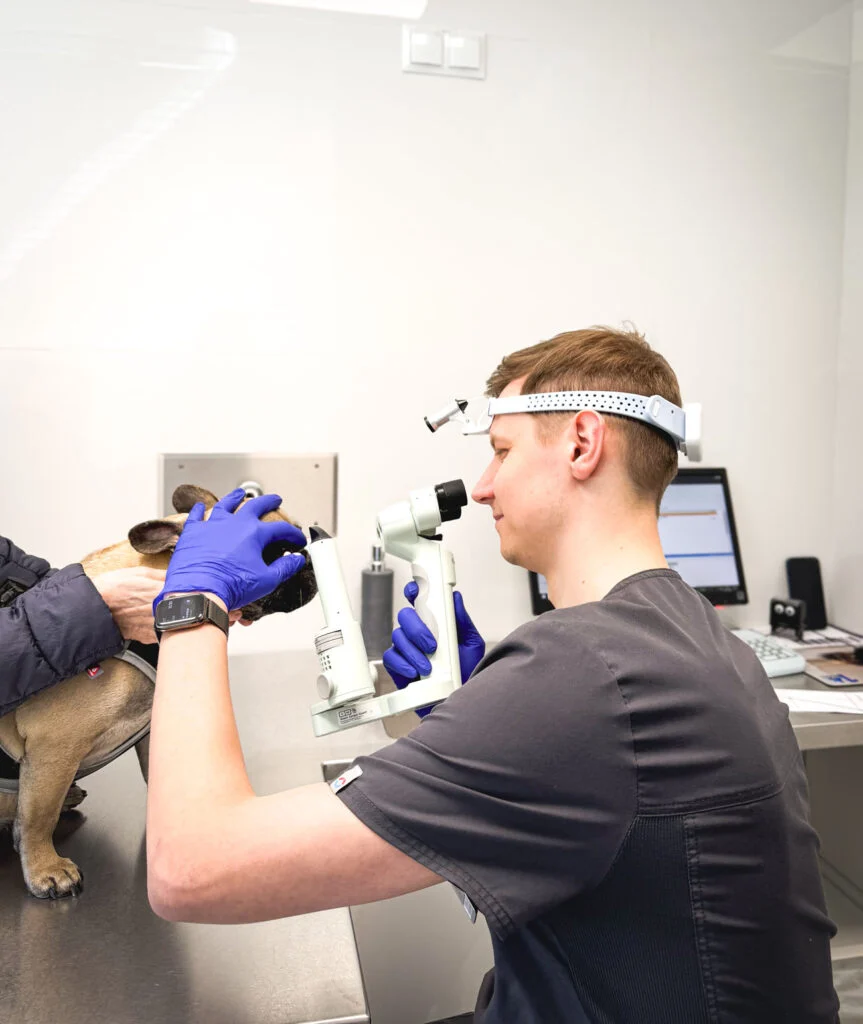
Treatment of intervertebral disc herniation at the Szmaragdowa Clinic
At our animal clinic, we offer comprehensive medical care for dogs and cats. We diagnose and treat spinal injuries of various origins that affect the comfort of your pet’s daily life. A herniated disc that is not diagnosed in time can lead to permanent paralysis and, in very severe cases, death of the animal. That is why it is so important to start the right treatment as soon as possible.
We invite you to make an appointment for a consultation at the Szmaragdowa Clinic!
We invite you to make an appointment for a consultation at the Szmaragdowa Clinic!