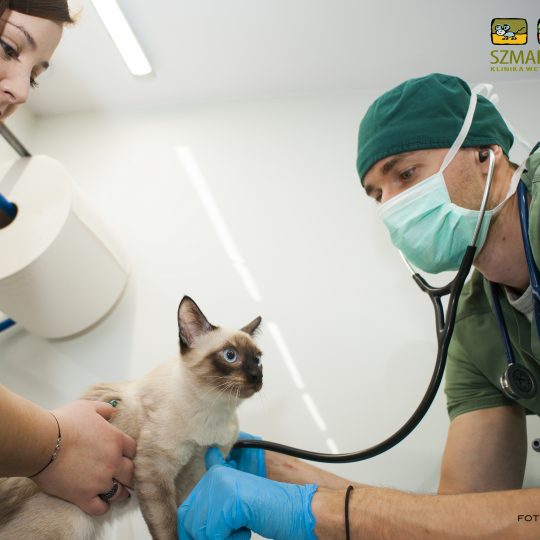



Chwilkę...
Your veterinarian establishes an individual preventive program for the animal during its first year of life.
After the first year of life, for the well-being of the patient, we recommend annual booster vaccinations against infectious diseases.
In Poland, annual rabies vaccination is mandatory. It is possible to vaccinate with combination vaccines (rabies+ other infectious diseases).
During a consultation at our clinic, the veterinarian will determine an individual vaccination schedule for your dog. The schedule will vary depending on the age of the dog, the environment it is living in, and the epidemiological status.
Vaccination against infectious diseases DP
(distemper, parvovirus):
● vaccination at 4-6 weeks of age, followed by DHPPi vaccine
Vaccination against infectious diseases DHPPi: (canine parvovirus, canine distemper virus, canine adenovirus type 2, parainfluenza virus)
● puppies under 16 weeks of age: Vaccination at 6-8 weeks of age, then every 3-4 weeks until 16 weeks of age or later
● first vaccination of adult dogs or puppies over 16 weeks of age:
2 doses at 3-4 week intervals (one dose can be assumed to provide protection)
● subsequent vaccination: annually (if no vaccine for kennel cough is available) or not more frequently than every 3 years
Vaccination against kennel cough KC (B. bronchiseptica, parainfluenza virus):
● puppies under 16 weeks of age: can be vaccinated from 3 weeks of age
In practice, vaccination is most often used between DHPPi vaccinations and at least 3 weeks before the dog is to be taken to a hotel/hospital/kennel or to a dog show.
● first vaccination of adult dogs or puppies over 16 weeks of age: 1 dose
● subsequent vaccination: every year
It is recommended to use a nasal vaccine, as the upper respiratory tract is the primary site of infection. On the day following vaccination, nasal and ocular discharge may be observed, sometimes accompanied by wheezing, sneezing, and/or coughing, especially in very young susceptible puppies. Symptoms are usually transient but may persist for up to 4 weeks. In animals with more severe clinical symptoms, appropriate antibiotic treatment may be indicated.
Rabies vaccination:
● Mandatory vaccination of dogs over 12 weeks of age.
● Booster doses every year.
Vaccination against Borrellia burgdorferi:
● puppies under 16 weeks of age: first dose at 12 weeks of age or later, followed by a second dose 3-4 weeks later (2 doses)
● first vaccination of adult dogs or puppies over 16 weeks of age:
2 doses at an interval of 3-4 weeks, subsequent vaccination: annually (just before the start of the tick season – February or August)
Vaccination against Leptospira interrogans:
● puppies under 16 weeks of age: first dose at 8 weeks of age or later, followed by another dose after 2-4 weeks (2 doses)
● first vaccination of adult dogs or puppies over 16 weeks of age:
● 2 doses 3-4 weeks apart, subsequent vaccination: annually
During a consultation at our clinic, your veterinarian will determine an individual vaccination schedule for your cat. The schedule will vary depending on the age of the cat, the environment it is living in, and the epidemiological status.
Panleukopenia (CPV) Herpesvirus (FHV-1) Calicivirus (FCV)
● kittens: first dose at 8-9 weeks, next dose after 3-4 weeks, last dose at 16 weeks or later
● adult cats: 2 doses 3-4 weeks apart
● subsequent vaccinations: One dose one year after completion of the vaccination cycle, then no more frequently than every 3 years
Female cats should be vaccinated before pregnancy, not during. If vaccination of pregnant females is necessary, only inactivated vaccines should be used. Live attenuated vaccines must not be used during pregnancy. Such vaccines should also not be used in cats infected with FeLV or FIV.
Rabies vaccination
One dose at 12 weeks of age, followed by annual boosters or as recommended by the manufacturer.
Leukemia (FeLV) vaccination
● kittens: First dose at 8 weeks of age, followed by a second dose 3-4 weeks later
● adult cats: 2 doses 3-4 weeks apart
● Subsequent vaccinations: One dose one year after completion of the vaccination series
● Cats in constant contact with the pathogen should be revaccinated annually (recombinant vaccine) or every 2-3 years (adjuvanted vaccine).
● Only cats that are not infected with FeLV (without viremia) should be vaccinated. Cats should be tested before vaccination to avoid unnecessary administration of the vaccine.
Vaccination against Chlamydophila felis
● kittens: first dose at 9 weeks of age, followed by a second dose 3-4 weeks later
● adult cats: 2 doses 3-4 weeks apart
● subsequent vaccinations: cats constantly exposed to the disease should be revaccinated annually
May be part of a preventive vaccination program in environments where many cats are present and infection has been confirmed.
Vaccination against Bordatella bronchiseptica
● kittens: one dose at 8 weeks of age
● Adult cats: One dose
● Subsequent vaccinations: Cats constantly exposed to the disease should be revaccinated annually
Vaccination may be considered when cats are particularly susceptible to the disease, e.g. when kept in large groups
● Myxomatosis
● Rabbit myxomatosis type I and II
● Rabies
● Distemper
● spot on
● collars
● tablets
● spray
● shampoos
● disinfectants
● tablets
● spot-on
● suspension
● paste
● injectable preparations
● blood (CBS and biochemistry panel)
● urine analysis
● fecal parasitological examination
● cardiological (ECG, echo/ultrasound)
● ophthalmological
● orthopedic (dysplasia)
● Plus Eight Program
● hormonal
● Suprelorin
● radical contraception methods (surgical castration)
Booking your appointment early ensures a shorter waiting time.